
The End of an Era: Free Education in Norway Closes its Doors

The End of an Era: Free Education in Norway Closes its Doors

For decades, Norway has been a beacon of hope for international students seeking high-quality education without the burden of exorbitant tuition fees. However, a recent policy change has significantly altered the landscape of higher education in the country. This blog post will delve into the details of this shift, exploring its reasons, the current state of tuition fees, and the potential implications for the future.

proudly offered free education to all students, regardless of their nationality. This policy attracted a diverse international talent pool, contributing to the country's vibrant academic environment. However, citing concerns about sustainability and the rising costs of higher education, the Norwegian government implemented a significant change:

Tuition fees for non-EU/EEA students: Starting in 2023, students from countries outside the European Union (EU), European Economic Area (EEA), and Switzerland will be required to pay tuition fees at public universities in Norway. These fees vary depending on the program and institution but are generally lower than those in popular study destinations like the UK, US, and Canada.

Reasons for the Change:

The Norwegian government's decision to introduce tuition fees for non-EU/EEA students was driven by several factors:
  • Financial Sustainability: The government expressed concerns about the long-term economic sustainability of providing free education to a growing international student population.
  • Quality of Education: Tuition fees were also seen as a way to generate additional revenue to invest in improving the quality of education at Norwegian universities.
  • Focus on Domestic Students: The government acknowledged that the influx of international students could limit the educational opportunities available for domestic students.

Current State and Implications:

While the introduction of tuition fees has undoubtedly changed the landscape of higher education in Norway, it is essential to note that the country remains a relatively affordable study destination compared to many others. Additionally, several exemptions and scholarships are still available for international students, including:

  • EU/EEA and Swiss Students: Students from EU/EEA countries and Switzerland enjoy free education in Norway.
  • Doctoral Programs: Postgraduate candidates are exempt from paying tuition fees regardless of nationality.
  • Exchange Programs: Students participating in exchange programs like Erasmus Mundus also benefit from free education.

The long-term effects of this policy change are still uncertain. While some argue that it could potentially hinder Norway's attractiveness as a study destination for international students, others believe it could lead to a more sustainable and focused Higher education system.

Conclusion:

The closure of Norway's free education era marks a significant shift in the country's approach to Higher education. While introducing tuition fees for non-EU/EEA students presents a new financial hurdle for some international students, Norway remains a relatively affordable and high-quality study destination. The future of higher education in Norway will depend on how effectively the government manages the transition and balances the needs of both domestic and international students.
Related Blogs

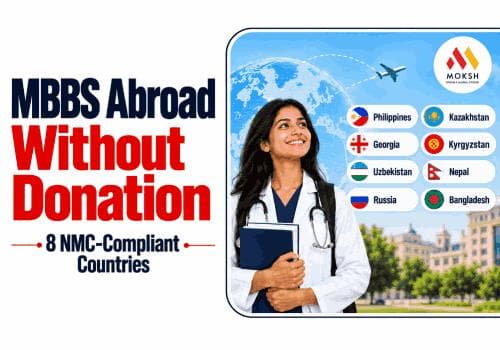
MBBS Abroad Without Donation 2026: 8 NMC-Compliant Countries

MBBS Abroad Without Donation 2026: 8 NMC-Compliant Countries

Yes, NEET-qualified Indian students can pursue MBBS abroad without donation in 2026 across eight NMC-compliant countries, costing Rs.15-65 lakh total. Kyrgyzstan and Uzbekistan are cheapest. But NMC compliance and donation-free status are separate - always verify your specific university on nmc.org.in before paying. Check 2026 regulatory alerts for FMGE/NExT eligibility. Philippines confirmed; Georgia government seats closed.

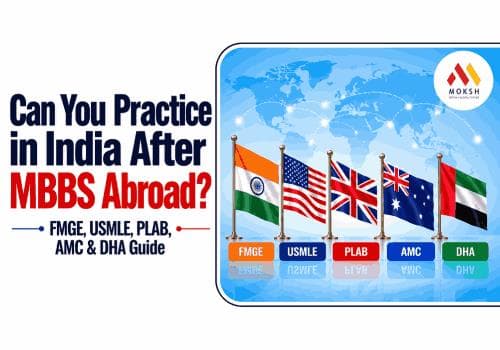
Can You Practice in India After MBBS Abroad? FMGE, USMLE, PLAB, AMC & DHA Guide

Can You Practice in India After MBBS Abroad? FMGE, USMLE, PLAB, AMC & DHA Guide

Yes, you can practice in India after MBBS abroad by clearing FMGE/NExT and registering with a State Medical Council. Choose an NMC-compliant university, complete the required internship, and qualify NEET. A low NEET score doesn't block your career. You can also pursue USMLE, PLAB, AMC or DHA for global practice. Start planning early.

Reciprocity Rule for MBBS in Philippines: What It Really Means for Your NMC Registration (2026)

Reciprocity Rule for MBBS in Philippines: What It Really Means for Your NMC Registration (2026)

The reciprocity rule for MBBS in the Philippines applies only to local licensing (PLE), not NMC recognition for India. As of June 2026, reciprocity is still awaited, but CHED and a House Resolution confirm that Philippine MD programs meet NMC FMGL Regulations - covering 54 months, English medium, and 12-month internship. UNP is NMC-compliant, state-funded and charges no donation. Start your NMC-valid MBBS journey today.

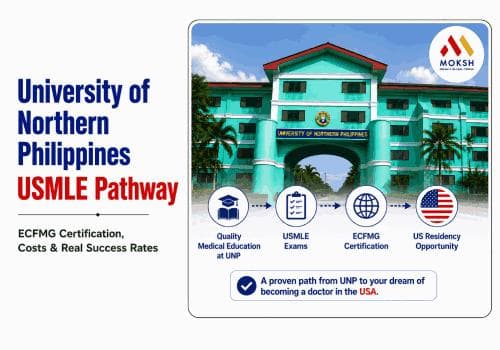
University of Northern Philippines USMLE Pathway: ECFMG Certification, Costs & Real Success Rates

University of Northern Philippines USMLE Pathway: ECFMG Certification, Costs & Real Success Rates

University of Northern Philippines (UNP) offers a USMLE pathway via its WDOMS-listed MD program. Graduates can pursue ECFMG certification by passing Step 1 and Step 2 CK, completing a Pathway, and OET Medicine. The total cost for UNP MD plus USMLE/ECFMG is approximately Rs.42-47 lakh over 10-12 years - less than an Indian donation seat. UNP also keeps India practice viable via FMGE/NExT. Start your journey today.

NMAT Exam for MBBS in Philippines 2026: Eligibility, Dates & Full Guide

NMAT Exam for MBBS in Philippines 2026: Eligibility, Dates & Full Guide

The NMAT exam is mandatory for MBBS in the Philippines, assessing aptitude and science for MD admission. Indian students must complete a BS pre-med bridge course and qualify NEET-UG before taking NMAT. The exam has two parts (240 questions, no negative marking), with a minimum 40th percentile for most colleges. You get three attempts. Always verify NMC compliance for Indian practice. Start your NMAT preparation now.

NEET Score Not Required for MBBS in the Philippines - Only Qualifying Matters (2026 Guide)

NEET Score Not Required for MBBS in the Philippines - Only Qualifying Matters (2026 Guide)

For MBBS in the Philippines, only a qualifying NEET score is mandatory - not a high cutoff. Philippine universities accept NEET-qualified students with 50% in PCB and age 17+. Admission is direct, without rank-based competition. Ensure the MD program meets NMC's 54-month rule and includes a 12-month internship. No donation fees; total cost is significantly lower than Indian private colleges. Start your affordable MBBS journey now.

Get free counselling

Fill below details to get a call from expert career counsellor