


MBBS in Georgia for Indian Students 2026
In Georgia, earning an MBBS is a great way to become a doctor. The program is typically six years long, including an internship, and is taught entirely in English. For Indian students, the tuition fees are quite affordable for MBBS in Georgia. The cost for your medical education is approximately Rs. 3.3 to 6.7 Lakhs per year.If you plan to practice in India, qualifying for the NEET exam is mandatory. Always choose a World Directory of Medical Schools (WDOMS) listed university.Those aiming for a US residency should also check the latest WFME/Intealth guidance. Remember, fee estimates can change, so always verify costs directly with the Georgian medical universities.

What is MBBS in Georgia and Why are Indian Students Choosing It?
An MBBS in Georgia is a 6-year medical course. It is taught in English in universities that are listed as NMC/WHO recognized institutions. It works like an MBBS in India, but classes happen in Georgia, a small country between Europe and Asia. Indian students choose this path for three simple reasons.
First, the fees are much lower than private medical colleges in India. Second, there is no donation or capitation fee. You get a seat based on your marks and NEET score, not on extra payments. Third, the degree is accepted in India, the USA, the UK, and the Gulf countries once you clear the right exams.
This makes Georgia a smart, low-stress option for students who want to become doctors without a huge financial burden.
Quick Facts about Georgia
The capital of Georgia is Tbilisi and the currency is Georgian Lari (GEL). Most medical universities sit in or near this capital city.
Here are the basic facts every student should know before applying:
| Fact | Detail |
|---|---|
| Capital | Tbilisi |
| Currency | Georgian Lari (GEL) |
| Official Language | Georgian (English used in medical universities) |
| Region | Caucasus (border of Europe and Asia) |
| Population | About 3.7 million |
| Time Zone | GST (UTC+4) |
| Climate | Four seasons, mild winters in most cities |
| Student Visa Type | D3 Student Visa |
MBBS Syllabus in Georgian Universities
The MBBS syllabus in Georgia runs for six years. It has three phases: pre-clinical, para-clinical, and clinical, followed by a one-year internship.
Here is the year-wise breakdown most Georgian universities follow:
| Year | Phase | Key Subjects |
|---|---|---|
| Year 1 | Pre-Clinical | Anatomy, Histology, Biophysics, Medical Biochemistry, Medical Genetics, History of Medicine |
| Year 2 | Pre-Clinical | Physiology, Microbiology, General Pathology, Basic Pharmacology, Biostatistics |
| Year 3 | Para-Clinical / Bridge | Systemic Pathology, Advanced Pharmacology, Forensic Medicine and Toxicology, Community Medicine, early hospital visits begin |
| Year 4 | Clinical | Internal Medicine, General Surgery, Obstetrics and Gynaecology, Paediatrics, ENT, Ophthalmology |
| Year 5 | Clinical | Orthopaedics, Dermatology, Psychiatry, Anaesthesiology, Radiology, more hospital rotations |
| Year 6 | Internship | Full-time, 12-month rotating internship in a teaching hospital |
- In the first two years, you build a strong base in human biology. You learn how the body works before you learn how it gets sick.
- From Year 3, you start visiting hospitals. This is where book learning turns into real skill.
- In Year 4, you work with patients under supervision. There are rotations to different major departments such as medicine and surgery. This practical exposure comes in handy during the time of the FMGE or NExT examination in India.
Most Georgian universities use a combination of the following teaching methods:
This syllabus is almost similar to MBBS syllabus in India. That is by design. Universities know their students must clear FMGE or NExT to practice in India, so they keep the subject order and depth close to what Indian medical boards expect.
For your degree to count in India, the course must follow the NMC rule of 54 months of theory and practice, plus 12 months of internship. Always confirm this exact structure with your chosen university before you pay any fee.
MBBS in Georgia Highlights 2026
| Feature | Details for Indian Students |
|---|---|
| Degree Awarded | MD (Equivalent to MBBS) |
| Course Duration | 6 Years (including 1 year of internship) |
| Medium of Teaching | English |
| Annual Tuition Fees | Rs.3.5 Lakhs to Rs.6.7 Lakhs (Approx.) |
| Eligibility | 50% in PCB in 12th Grade (40% for reserved categories) |
| NEET Requirement | Mandatory (with qualifying score) |
| IELTS/TOEFL | Not Required |
| Primary Intake | September / October 2026 |
| Recognized By | NMC, WHO, WFME, ECFMG, FAIMER |
| Top Universities | Tbilisi State Medical University, Georgian National University (SEU), David Tvildiani Medical University |
Why Study MBBS in Georgia?
For Indian students, pursuing an MBBS in Georgia is a wise decision. It provides an excellent balance between price and quality. You get a world-class medical education without the high cost of other countries. Here are the main benefits.
A Degree Recognized Worldwide
The medical universities are approved by the World Health Organization (WHO) and the National Medical Commission (NMC). This implies that this degree will allow you to practice medicine in India and many other nations.
Low Cost and Great Value
The MBBS in Georgia fee is very affordable. Along with a low cost of living, this makes it a budget-friendly option for a high-quality education.
All Classes are in English
You will study your entire MBBS program in English. There is no need to learn a new language. This helps you focus on your studies from the very first day.
Real Hospital Experience
The program includes strong clinical training. You will work with patients in modern hospitals. This hands-on experience is key to becoming a skilled and confident doctor.
A Simple Admission Process
The admissions procedure is simple to understand. There isn't any entrance exam. This allows you to start your medical career stress-free and reserve your seat.
MBBS in Georgia Fee Structure 2026
Every student aspires to be accepted into Georgia's top medical school. 18 private universities and 5 public universities in Georgia provide medical degrees. Most of the Top Medical Universities in Georgia are based in Tbilisi, due to their high patient inflow. Find the List of Georgia medical colleges.
Which other Medical & Healthcare Courses are Available in Georgia?
Apart from MBBS, Indian students can study other courses like BDS (Dentistry), BSc Nursing, MSc Nursing and Pharmacy. Other Public Health courses in Georgia are also available. Most of these courses do not require NEET.
Here is a quick look at your options:
| Course | Duration | NEET Needed for India Practice | Approx. Annual Fee (USD) |
|---|---|---|---|
| BDS / Dentistry | 5 years | Yes (for NEET-MDS) | 4,000-6,500 |
| BSc Nursing | 4 years | No | 3,000-5,500 |
| MSc Nursing | 2 years | No | 3,500-6,000 |
| B.Pharm (Pharmacy) | 4 years | No | 2,500-4,500 |
| Public Health | 4 years | No | 3,000-5,000 |
Eligibility Criteria for MBBS in Georgia
To pursue an MBBS in Georgia, the eligibility criteria for Indian students are simple and clear.
You must be at least 17 years old by December 31st of your admission year.
You need a minimum of 50% in Physics, Chemistry, and Biology (PCB) in your 12th grade. For SC/ST/OBC students, the requirement is 40%.
Is NEET required for MBBS in Georgia? Yes, a qualifying NEET score is required for all Indian students.
English is the primary language of instruction. So tests such as the TOEFL or IELTS are often not necessary.
Best Medical Universities in Georgia
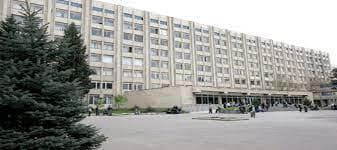

Tbilisi state medical university faculty of medicine
- Integrated American Program
- Bachelor
- Georgia
It is one of Georgia's oldest and most respected medical schools. It offers a six-year English-medium MD program with extensive clinical training through affiliated hospitals. The university is highly reputed in the international medical community. It is one of the go-to medical universities for international students pursuing medical seats in Georgia.

Ivane Javakhishvili Tbilisi State University
- General Medicine
- Bachelor
- Georgia
The Ivane Javakhishvili Tbilisi State University is located in Tbilisi, Georgia and it is the oldest university in Caucasus region of Georgia. The year of establishment goes hundreds of years back to 1918, thus having a century long academic experience. Yet the century long experience serves no purpose in studying medicine since the faculty of medicine was introduced in 1994 only at the University. As we discuss the infrastructure, the University is diversified into 6 faculties, namely medicine, humanities, law, economics, social and political science and business. Moreover, there is a scientific library, numerous laboratories, 7 museums, etc. This is a public University so it is preferred by the international students to a certain level. A major factor that may support your choice of studying medicine at this University is its location. University is located in Tbilisi which is relatively more populated (˜ 10 Lakhs) than the rest of Georgian cities. So you can expect a relatively better clinical exposure at this University, if not the best around the world. However, if a good clinical exposure is essential to you which should be, you should look for Universities in Ukraine or Russia which are way better alternatives and have much better facilities for medical aspirants.
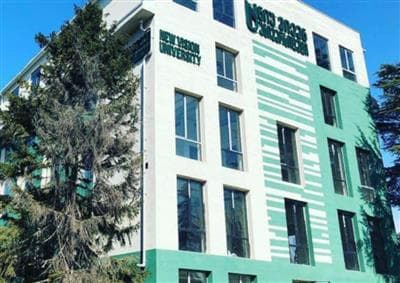

New Vision University
- General Medicine
- Bachelor
- Georgia
The New Vision University of Georgia was founded in 2013 and therefore its first ever batch has graduated only 2 years ago in 2019. The University is further privately owned which makes it a bit tricky for an MBBS abroad aspirant to study here. Nevertheless, the University has tie-ups with some medical institutions around the globe which has led to attainment of significant projects. The New Vision University hospital was established only a few years ago in 2014. The clinical exposure one gets while studying at New Vision University is modest given the population of Tbilisi city which is a little over 10 Lakhs only. The University engages in innovative activities in collaboration with other pertinent organizations which are done in attempt of serving humanity in a better way. Hence, the option of studying at New vision University may be considered by an international medical aspirant.
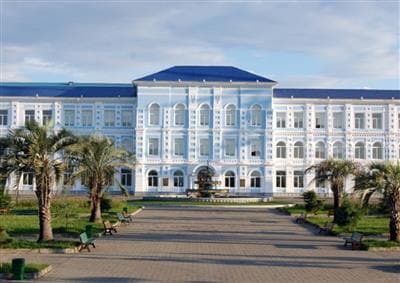

Batumi Shota Rustaveli State University
- General Medicine
- Bachelor
- Georgia
Batumi Shota Rustaveli State University came into existence in the year 1923 in the city of Batumi, Georgia. The course of medicine, however, was introduced in 1990 thereby having a history of little over 3 decades of teaching medicine. It is one of the very few government Universities in Georgia and hence reliable for international students to pursue an MBBS abroad. The medical aspirants from India might not want to take a chance to study not just here but anywhere in Georgia since there is no Indian embassy in Georgia which imples your do not have any sort of institution representing your own nation during your 5 year stay there in Georgia. Anyway, speaking of the faculty at the University, there are professors and researchers amounting to 273 and 71 respectively. Besides, there are as many as 387 visiting professors at the University. The clinical exposure is low due to population of Batumi city being approximately 2 Lakhs. The courses incorporate both professional and research aspects. The University further happens to be affiliated with leading medical universities abroad and this is a great convenience for students to participate in scientific seminars and other research programs.

Ilia State University
- General Medicine
- Bachelor
- Georgia
Ilia State University (ISU), located in Tbilisi, Georgia, is a flagship public research and comprehensive higher education institution in the South Caucasus which focuses on scientific advancement and transferring top notch knowledge to facilitate societal development at both the local and international level.ISU was established in 2006 as a merger of six different institutions, each having a long history and a diverse institutional profile. As one of the leading research universities in Georgia and Caucasus Region, ISU unites around 30 Research Institutes and Centres, covering a wide range of fundamental and applied sciences. Research Units including National Astrophysical Observatory, Institute of Botany, and various jointly established research centres that intensify international collaborations.


Tbilisi Medical Academy
- General Medicine
- Bachelor
- Georgia
The excellent climatic condition and brilliant education structure are two main reasons why Georgia is a popular destination among medical aspirants. A tourist hotspot in itself, Georgia is also slowly transforming into a hub for students who wish to study MBBS abroad. Medical universities in Georgia hold the best ranks among both Europe and Asia as well. Students who are on the brink of giving up their dreams due to the high fee in Indian private medical colleges can fulfil their MBBS dreams by choosing the nicer option – MBBS in Georgia. Though low fees, the MBBS universities in Georgia provide a rich atmosphere and employ modern technologies in the educational curriculum.
Georgia Government vs Private Medical Universities: Which Should You Choose?
For new Indian students, as of 2026, private universities would be their preferred choice. Government universities have mostly closed their doors to new foreign admissions.
This is a big shift, so it pays to understand the difference clearly.
| Factor | Government Universities | Private Universities |
|---|---|---|
| 2026 Admission Status | Mostly closed to new international students | Open and actively enrolling |
| Funding | State-supported | Self-funded through tuition |
| Class Size | Larger, more crowded | Smaller, more personal attention |
| Indian Student Support | Limited | Dedicated support offices, Indian mess and hostels common |
| Examples | TSMU, Ivane Javakhishvili TSU, Akaki Tsereteli SU | University of Georgia, Alte University, GAU, SEU, DTMU, Caucasus University |
Government Medical Universities in Georgia
Government universities like Tbilisi State Medical University built strong reputations over decades. They were once the top choice for Indian students. Since 2026, most of these schools have switched their target group to local Georgian students. New international applications are largely on hold. If you already study at one of these schools, your degree stays valid. But if you are applying fresh in 2026, this path is mostly closed.
Private Medical Universities in Georgia
Private universities are now the practical route for Indian students. Before you pick one, check four things: NMC approval, listing in the World Directory of Medical Schools (WDOMS), a real hospital tie-up for clinical training, and a track record in FMGE or NExT results.
There are some excellent private universities such as University of Georgia, which offers the American Program to students who aim to take up the USMLE exams. Alte University, where the fees are also low and there is good compliance with NMC.
Other universities that are comparable are Georgian American University, Georgian National University (SEU), Caucasus University and David Tvildiani Medical University. They each have their own advantages with regard to cost, access to hospital and exam outcomes. So, make sure to compare them all before you decide.
Admission Process to Study MBBS in Georgia for Indian Students
MBBS admission in Georgia for Indian students is straightforward. These are the main steps that will help to reserve your seat:
- 1
Fill Application Form
Fill out the application form for the university with your correct information.
- 2
Submit Documents
Submit your 10th or 12th mark sheets, NEET scorecard, passport and other necessary documents.
- 3
Accept Offer and Pay Fees
You will receive an invitation letter on acceptance. Then pay the tuition fees for the first year.
- 4
Get Student Visa
Upon approval, you can go to Georgia to commence your classes.
Documents Required for MBBS in Georgia
Preparation of your documents is one important thing. To have a successful application process, you will have to prepare the following:
- Valid passport.
- Academic mark sheets for 10th and 12th grade.
- Your NEET scorecard.
- A birth certificate.
- Recent passport-sized photographs.
- A medical report confirming good health.
- Bank statements for financial proof.
Curriculum Structure
The MBBS program in Georgia is a six-year course. It is split into two clear parts. This medical curriculum gives you strong book knowledge and real hospital practice.
Basic Medical Sciences
(First 2-3 Years)
You will learn the core subjects all doctors need. This includes Anatomy, Physiology, and Biochemistry. You will study the human body, how it works, and the basics of disease. This phase builds your essential knowledge.
Clinical Sciences
(Final 3-4 Years)
You will move into hospitals for hands-on clinical training. You will work in departments like Internal Medicine, Surgery, and Pediatrics. Combining case studies and actual patients, you will gain practical knowledge. This prepares you for medical practice.
The main course structure is the same in most universities. Some may offer extra focus on research or USMLE preparation for students targeting a US residency.
Recognition of Medical Universities in Georgia
Georgia medical degrees are respected globally. The medical universities have received the approval of major international bodies. This will ensure that your education meets tough international standards.
The main recognizing organizations are:
This global recognitionmeans you can practice medicine in India, the USA, and many other countries after graduation.
What is USMD / Integrated American Tracks?
Some medical universities in Georgia offer a special program called USMD or an Integrated American Track. This program is made for students who want to become doctors in the United States.
Think of it as a direct path to a US medical residency. The courses are designed to help you pass the important United States Medical Licensing Examination (USMLE).
Here is what these programs often include:
Special classes focused on USMLE preparation
Help arrange clinical rotations in American hospitals
A curriculum that meets all ECFMG and WFME requirements
This track gives you a clear plan to build a medical career in the American healthcare system.
Best Universities in Georgia for MBBS
Let's compare the MBBS in Georgia for Indian students fees at the top Medical Universities in Georgia. This table provides a quick reference in both USD and INR.
| University Name | Tuition Fees / Year (USD) | Tuition Fees / Year (INR) |
|---|---|---|
| University of Georgia (Integrated American Program) | 6000 USD | Rs. 5,01,563 |
| Tbilisi State Medical University | 8000 USD | Rs. 6,68,750 |
| Teaching University Geomedi | 5500 USD | Rs. 4,59,766 |
| Ilia State University | 5900 USD | Rs. 4,93,203 |
| Georgian National University | 5500 USD | Rs. 4,59,766 |
| Georgian American University | 5500 USD | Rs. 4,59,766 |
| David Tvildiani Medical University AIETI | 8000 USD | Rs. 6,68,750 |
| Caucasus University | 6000 USD | Rs. 5,01,563 |
| Alte University | 5000 USD | Rs. 4,17,969 |
| Akaki Tsereteli State University | 4000 USD | Rs. 3,34,375 |
What is FMGE/NExT Pass percentage for the MBBS graduates from Georgia?
Georgia's overall FMGE/NExT pass rate is about 35% to 45%, the highest among major MBBS-abroad countries, based on data released by the NBEMS.
FMGE Pass Rate: Georgia vs Russia, Ukraine, China
Here is how Georgia compares to other popular MBBS-abroad destinations:
| Country | Approx. FMGE Pass Rate |
|---|---|
| Georgia | 35%-45% |
| Bangladesh | About 32% |
| Russia | About 29%-30% |
| Ukraine | 9%-31% (falling due to the war) |
| Kazakhstan | 20%-30% |
| Kyrgyzstan | 15%-25% |
| Uzbekistan | 10%-20% |
| China | 9%-20% |
Which Georgian Universities Have the Best FMGE/NExT Results?
University choice matters more than country choice. Some Georgian schools post results far above the national average.
Top Georgia Universities by FMGE 2025 Performance
| Rank | University | Pass Rate |
|---|---|---|
| 1 | Georgian American University (GAU) | 53.49% |
| 2 | Alte University | 48.77% |
| 3 | BAU International University | 45.05% |
| 4 | Georgian National University (SEU) | 43.77% |
| 5 | Tbilisi State University | 43.16% |
| 6 | Caucasus University | 41.58% |
| 7 | Caucasus International University | 41.30% |
| 8 | David Tvildiani Medical University | 41.18% |
How to Improve Your FMGE/NExT Score after MBBS in Georgia
Start your exam prep early, not after graduation. Students who wait until their final year often struggle.
- Begin FMGE-style study from Year 1 or Year 3, alongside your regular coursework
- Take regular mock tests to track your progress
- Choose a university with Indian faculty or coaching tie-ups
- Build a strict revision plan during your final clinical year
- Join structured NExT coaching, like the programs offered through MOKSH Academy, instead of relying only on recorded video lectures
Small, steady effort across six years beats a rushed effort at the end.
Does MBBS in Georgia Follow NMC Rules?
Students from India should refer to rules of NMC before taking admission in Georgia. The foreign medical course should comply with the duration, internship, medium of instruction and licensing requirements. Indian students who desire to practice Medicine in India after studying MBBS abroad will also need to clear the NEET exam.
Checklist:
- Course duration should meet NMC FMGL rules
- NEET qualification is required
- Medium of teaching should be English
- Internship and clinical training must be clear
- University should be listed in WDOMS
- Degree should allow licensing in Georgia
- Student must later clear FMGE/NExT in India
Is MBBS in Georgia Good for Indian Students?
Absolutely, studying MBBS in Georgia may be a great choice for Indian students who would like to receive medical education in English, pursue study in the European way, and contemplate a route towards the USMLE. However, it is not the most affordable choice for an abroad MBBS course. Students are required to make a comparison between Georgia and Russia, Uzbekistan, Kazakhstan and private MBBS in India before applying.
| Student Type | Is Georgia Good? |
|---|---|
| Wants English-medium MBBS | Yes |
| Wants USMLE pathway | Good option |
| Wants lowest budget | Not always |
| Wants Indian food and city life | Good in Tbilisi |
| Wants India practice after MBBS | Only if NMC rules are met |
Cost of Living in Georgia for Indian Students
Living costs in Georgia stay low compared to most European countries. Most students spend between $250 and $450 a month, depending on lifestyle.
Here is a fuller breakdown:
| Expense Type | Cost (GEL) | Cost (USD) | Cost INR (1 USD = RS. 83) |
|---|---|---|---|
| Transportation (Travel Pass) | 40-60 | $15-25 | Rs.1,280-1,920 |
| Utilities | 120-300 | $50-120 | Rs.3,840-9,600 |
| Rent (1-Bedroom Apartment) | 800-2,500 | $296-1,003 | Rs.25,600-80,000 |
| Groceries | 200-300 | $75-120 | Rs.6,400-9,600 |
| Leisure Activities | 50-200 | $20-75 | Rs.1,600-6,400 |
| Mobile & Internet | 40-80 | $15-30 | Rs.1,280-2,560 |
| Health Insurance (Mandatory) | 100-200 | $38-75 | Rs.3,200-6,400 |
| Indian Food (Extra Cost) | 320-400 | $120-150 | Rs.10,240-12,800 |
Students who cook at home and share rent with roommates spend the least. Students who eat out often or rent alone spend the most.
For planning, think in three budget levels: a budget plan near $250 a month using a shared hostel and home cooking, a mid-range plan near $350 a month with some eating out, and a comfortable plan near $450 a month with a private room and regular dining out. Over a year, this adds up to roughly INR 1.2 to 1.8 lakhs in living costs, on top of your tuition fee.
MBBS Cost Comparison: Georgia vs. Russia / Uzbekistan / India
The key to selecting a reasonably priced MBBS program overseas for Indian students is knowing the whole cost. A straightforward yearly cost comparison of Georgia, Russia, Uzbekistan and India can be found here.
| Aspect | Georgia | Russia | Uzbekistan | India |
|---|---|---|---|---|
| Approx. Annual Tuition Fee (INR) | Rs.3.5 Lakhs - Rs.6.7 Lakhs | Rs.2.4 Lakhs - Rs.5.5 Lakhs | Rs.2.5 Lakhs - Rs.5 Lakhs | Govt.: Rs.6,000 - Rs.1.5 Lakhs Private: Rs.10 Lakhs - Rs.25 Lakhs+ |
| Approx. Annual Living Cost (INR) | Rs.1.2 Lakhs - Rs.1.8 Lakhs | Rs.1.5 Lakhs - Rs.2.4 Lakhs | Rs.0.7 Lakhs - Rs.1.2 Lakhs | Varies significantly by city and college |
| Total Approx. Annual Cost | Rs.4.7 Lakhs - Rs.8.5 Lakhs | Rs.3.9 Lakhs - Rs.7.9 Lakhs | Rs.3.2 Lakhs - Rs.6.2 Lakhs | Varies widely |
| Course Duration | 6 years | 6 years | 6 years | 5.5 years |
| Medium of Teaching | English | English | English | English |
| NEET Required | Yes (Mandatory) | Yes (Mandatory) | Yes (Mandatory) | Yes (Mandatory) |
| Key Recognition | NMC, WHO, WFME | NMC, WHO, ECFMG | NMC, WHO, FAIMER | NMC, WHO |
MBBS in Georgia vs Private MBBS in India
The Georgian universities do not ask for any donation or capitation fees like many private medical colleges in India. Your seat depends only on your marks and NEET score, not on extra payments under the table.
This single difference changes the entire cost picture:
| Parameter | Private MBBS in India | MBBS in Georgia |
|---|---|---|
| Donation/Capitation Fee | Often Rs.50 lakh to Rs.2 crore or more | None |
| Total 6-Year Cost | Rs.50 lakh to Rs.1.5 crore or more | Rs.25 lakh to Rs.45 lakh |
| Admission Basis | NEET rank plus management quota plus donation | NEET qualifying score plus documents |
| Seat Certainty | Depends on counselling rounds | Direct, first-come basis |
| Fee Transparency | Can vary by college and year | Fixed and published in advance |
Scholarships & Education Loan for MBBS in Georgia
Yes, Indian students can get partial scholarships and full education loans for MBBS in Georgia. For example, University of Georgia offers a $3,000-a-year scholarship under its American Program, worth about $18,000 over the full course.
The number of scholarships available to explore:
| Bank/NBFC | Loan Amount | Interest Rate (approx.) |
|---|---|---|
| SBI Global Ed-Vantage | Up to Rs.50 lakh | 9%-11% |
| HDFC Credila | Up to Rs.40 lakh+ | 10%-13% |
| ICICI Bank | Varies by profile | 9.5%-12% |
| Avanse and other NBFCs | Varies, often unsecured | 11%-14% |
Advantages of Studying MBBS in Georgia
Georgia is a great place for MBBS for several reasons, some of which are listed below.
Is Georgia safe for Indian students? Georgia is one of the safest countries in the world and ranks top among all European countries in terms of safety.
Offers high-quality education at approximately the same price as in Kazakhstan, Kyrgyzstan, etc.
Georgia is based on the ECTS system of education. Therefore, the students can move to any country in Europe without losing their academic base.
Georgian universities are prepared according to all NMC requirements, which can send their graduates to the NExT exam.
In some Georgian universities, there are special programs that assist the students in studying to pass the USMLE but still earn their MD.
Georgian universities are recognized by the WHO, ECFMG, GMC (UK), MCC (Canada), and the medical councils of several Gulf nations.
Students begin clinical practice in teaching hospitals after 2.5 years, gaining real patient interaction for the remaining 3.5 years.
About 60% of Georgians aged 18-35 understand English, making communication easier for Indian students.
After completing medical PG (residency) in Georgia, students can apply for Georgian citizenship.
Is MBBS in Georgia Safe for Indian Students or not?
Georgia is among the safest countries in the world for international students. Thanks to the low crime rate and high campus security.
The following are some of the reasons why it's a safe choice:
- Georgia has a strong record on the safety indexes, frequently outperforming many European countries.
- Violent crime occurs rarely, even in Georgian capital Tbilisi.
- Students, particularly women, report feeling safe when they walk and use public transport.
- More than 8000 Indian students already reside here and have established a robust support system.
- Near a majority of campus, you can find Indian grocery stores, restaurants and mess facilities.
- Public transport is easily and cheaply accessible.
Normal precautions apply as in all countries. Avoid unfamiliar areas at night and keep your documents secure. But day-to-day life in Georgia is calm and student-friendly.
Career Opportunities after MBBS in Georgia
After MBBS in Georgia, you can build a medical career in India, the USA, the UK, the Gulf, or even Georgia itself, depending on which licensing exam you clear.
| Pathway | Exam/Requirement | Outcome |
|---|---|---|
| Practice in India | FMGE or NExT | NMC registration |
| Practice in USA | USMLE Step 1 to 3 | US residency, often via the Integrated American Track |
| Practice in UK | PLAB | GMC registration |
| Practice in Gulf countries | DHA, MOH, or SCFHS exams | Licensed local practice |
| Stay in Georgia | Local residency plus licensing | Path toward Georgian permanent residency |
Most Indian students choose the FMGE or NExT route to return home and practice. Others use the USMD or American Program track to aim for a US residency instead. A smaller group stays back in Georgia for postgraduate study, which can later open a path to citizenship.
Salaries for resident doctors in India currently range widely by state and specialty, often starting in the low lakhs annually and rising sharply after postgraduate qualification. These figures shift often, so always check current data before planning your finances around them.
Disadvantages of Studying MBBS in Georgia
Georgia offers strong value, but it is not without real downsides. Before you make a decision, consider these things-
Georgia does not belong to the European Union. Which means that you will not earn some of the benefits that EU students enjoy. Also, you will not have the same free movement rights.
Tuition and living costs greater than in Russia and China.
Students in Georgia are accepted on an annual basis, in September. If you miss this opportunity, lose a whole year.
India does not have a direct embassy in Georgia. Often, support comes from the Indian Embassy in the USA, which may also get delayed during emergencies.
Most government universities have ceased accepting fresh foreign students as of 2026. So you have no option except for private universities.
Studying in Georgia will not guarantee you passing FMGE/NEXT. You will need to do your own preparation.
Why should you prefer MOKSH Overseas Educon's for MBBS in Georgia?
MOKSH Overseas Educon is a trusted MBBS in Georgia consultant that helps students pick the right university and avoid common mistakes.
Our Support is Complete:
Getting You Admitted
We help from the start. We offer career counselling to find the right fit. We create a university shortlist just for you. We manage your application documentation and let you track everything with live application tracking. We also provide interview training so you feel ready.
Planning After Admission
Once you get your successful admits, we keep helping. We handle your visa documentation so there are no delays. We can arrange your travel package and help with currency exchange.
Settling In
We offer a pre-departure orientation to set your mind at ease. We also provide post arrival services and a campus buddy to help you feel at home.
MOKSH makes the journey to a medical degree abroad simple and clear. With years of experience, we help you choose the right place for your goals and budget. We handle the details so you can focus on your dream.
Explore Our Blogs on Georgia
Do Medical Universities in Georgia Meet NMC Criteria? FMGL 4(b) Compliance Guide
Can Georgian medical universities meet NMC rules? Private universities can satisfy FMGL criteria, but Clause 4(b) is risky: a 6-year MD gives supervised junior-doctor status, not independent practice. You need residency, state certification, and Georgian language. State universities closed to new foreign students. FMGE remains mandatory. Verify everything in writing before paying.

Georgia Student Visa for Indian Students 2026: Complete D3 Visa Guide
Georgia is rapidly emerging as a preferred destination for international students seeking affordable, high-quality European education. Georgia offers numerous advantages, including low tuition fees, reasonable living costs, and promising job prospects for graduates. Understanding the visa process is essential for international students studying in Georgia.
Top 10 Medical Colleges in Georgia (2026-27)
Planning MBBS in Georgia (2026-27)? This guide ranks the Top 10 Medical Colleges in Georgia with NMC-approved, English-medium programs, ECTS credits, and listings in WDOMS. Compare fees, hospital tie-ups, and student outcomes at universities like TSMU, University of Georgia, and BSU. Get clear admissions timelines, living costs, and pathways for NExT/USMLE success - affordable, safe, career-ready.