


Caucasus University Georgia 2026: MBBS Fees, Admission, Eligibility, NMC & Ranking
The Caucasus University in Tbilisi, Georgia offers a six year MD course. This MBBS program is recognized by the National Medical Commission in India. Tuition stays fixed at $6,000 per year for all six years. Add housing, food, and insurance, and the full course costs close to $59,500, or roughly Rs.50 lakhs, over six years. The program follows the European Credit Transfer System, with 360 credits spread across 12 semesters, and every class runs in English. Clinical training happens at the JCI-accredited Caucasus Medical Center and four other partner hospitals in Tbilisi. Students who clear NEET-UG and meet NMC eligibility rules can apply directly. There is no separate entrance exam.
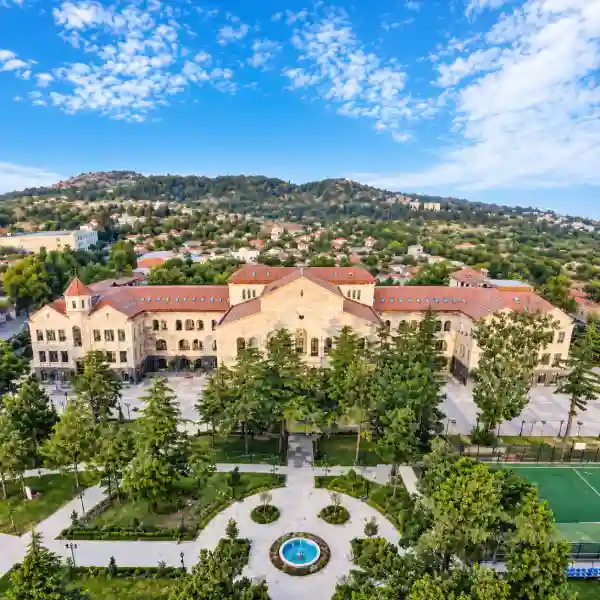
Caucasus University Georgia Tbilisi: Quick Facts
Caucasus University started in 2004, growing out of the Caucasus School of Business, founded in 1998 with Georgia State University, Atlanta. The Caucasus School of Medicine works from a historic campus built in 1909, in central Tbilisi. One thing trips up a lot of families researching this Georgian medical university: Caucasus University (CU) is a separate institution from Caucasus International University (CIU), even though both sit in Tbilisi and both run MD programs.
| Parameter | Detail |
|---|---|
| Founded | 2004 (Medical School campus built 1909; program expanded 2012/2018) |
| Location | 1 Paata Saakadze Street, Caucasus University Georgia Tbilisi 0102 |
| Legal Status | Private multidisciplinary university |
| Ranking | Top 10 in Georgia; ranked #656 in QS Europe Rankings |
| Medium of Instruction | English |
| Degree Awarded | Doctor of Medicine (MD), equivalent to Indian MBBS |
| Program Duration | 6 years, 360 ECTS credits |
| Accreditation | NCEQE (Georgia), WFME, listed in WDOMS |
Why Choose Caucasus University for MBBS
Families comparing options for MBBS in Georgia usually ask the same question: what makes one university worth the money over another? Here is what sets Caucasus University apart.
Fixed tuition for six years
The fee stays at $6,000 per year. No hidden hikes in year three or four.
JCI-accredited clinical partner
The Caucasus Medical Center earned Joint Commission International accreditation in July 2024, a mark few Georgian teaching hospitals hold.
Full NMC FMGL 2021 compliance
The duration of the program, the internship program and the instruction in English are all in compliance with India's rules of licensing.
Modern preclinical tools
Students train on a 3D Anatomage Table and in BSL-1/BSL-2 labs before they touch a real patient.
Strict continuous assessment
Daily quizzes and midterms replace last-minute cramming, and it shows in exam outcomes.
MBBS in Caucasus University Georgia: Program Structure & Curriculum
The Medical Program at Caucasus University Georgia is six-year-long and delivers 360 ECTS credits. One ECTS credit equals 25 hours of combined classwork and independent study, so the full program adds up to 9,000 hours of academic workload. Each year splits into a Fall and Spring semester, and each semester runs 19 weeks: 16 weeks of teaching plus 3 weeks of exams.
The curriculum builds in stages. During the early semesters, integrated organ-system modules are taught, combining the fields of anatomy, physiology and biochemistry into one teaching block. Preclinical science courses include pathophysiology, pharmacology and microbiology. In Year 3 and above, students rotate between the internal medicine, surgery, pediatrics, obstetrics, psychiatry and emergency medicine. The final year includes a mandatory clinical internship.
| Curriculum Component | ECTS Credits |
|---|---|
| Integrated Organ-System Modules | 60 |
| Preclinical & Basic Sciences | 82 |
| Clinical Medicine Rotations | 173 |
| Mandatory Clinical Internship | 14 |
| Research Methodology | 17 |
| Elective Courses | 14 |
| Total | 360 |
For the 2026-27 session, Fall semester classes start September 8, 2026 and run through January 10, 2027, followed by exams. Spring semester starts February 23, 2027.
Caucasus University Georgia MBBS Fees
The biggest question every parent asks first: what does this actually cost? Caucasus University Georgia MBBS Fees stay flat at $6,000 per year for tuition, a rare guarantee among Georgian medical schools, where fees often climb year to year.
Add accommodation, food, and insurance, and the real annual cost lands between $9,750 and $10,750. Year one runs higher because of one-time visa and residence permit charges.
| Academic Year | Tuition (USD) | Accommodation (USD) | Living & Food (USD) | Visa & Insurance (USD) | Total Annual Cost (USD) |
|---|---|---|---|---|---|
| Year 1 | $6,000 | $2,000 | $1,500 | $1,250 | $10,750 |
| Year 2 | $6,000 | $2,000 | $1,500 | $250 | $9,750 |
| Year 3 | $6,000 | $2,000 | $1,500 | $250 | $9,750 |
| Year 4 | $6,000 | $2,000 | $1,500 | $250 | $9,750 |
| Year 5 | $6,000 | $2,000 | $1,500 | $250 | $9,750 |
| Year 6 | $6,000 | $2,000 | $1,500 | $250 | $9,750 |
| Total | $36,000 | $12,000 | $9,000 | $2,500 | $59,500 |
Caucasus University Georgia Tbilisi Scholarships for Indian Students
Caucasus University offers two scholarship routes worth checking before you finalize your budget.
International Student Grant
Open to people who are not nationals of Georgia and includes Indian nationals. It is decided upon after verification of documents.
Academic Excellence Award
given to students who post top scores in university semester exams, renewable each term based on performance.
Scholarship terms and amounts change from year to year. Confirm current details directly with the university's admissions office before you count on a specific discount.
Caucasus University Georgia Eligibility
Check these baseline requirements for Caucasus University Georgia eligibility before you apply:
Minimum 50% aggregate in Physics, Chemistry, and Biology at the 10+2 level (40% for SC/ST/OBC reserved categories)
A valid, qualifying NEET-UG scorecard as per National Testing Agency norms
Indian passport valid for at least 18 to 24 months at the time of application
Medical fitness certificate, including an HIV-negative report, from an authorized practitioner
No separate university entrance exam required
Caucasus University Georgia Admission Process
Caucasus University Georgia admission runs on two intake cycles each year, and Fall is the main one most Indian students choose.
| Enrollment Stage | Fall Intake (Primary) | Spring Intake (Secondary) |
|---|---|---|
| Application Period | May 1 - August 1 | November 1 - January 25 |
| Visa Interview Window | July - September | December - February |
| Class Start | Early September | Late February |
The process moves in five steps.
- 1
First, submit your application and documents for review.
- 2
Second, receive a provisional acceptance letter from the university.
- 3
Third, the university forwards your file to Georgia's National Center for Educational Quality Enhancement for validation.
- 4
Fourthly, after that has been done, the university sends an official invitation letter and you apply for a D3 Study Visa.
- 5
Fifth, after you land in Tbilisi, the university helps with medical screening and your Temporary Residence Permit filing.
Caucasus University Georgia Tbilisi Required Documents
Gather these documents early. Several need apostille or notarization before submission.
- Academic records: 10+2 marksheet with PCB score which has been apostilled and also 10th grade passing certificate (apostilled)
- Identification proof: Apostilled birth certificate and a valid Indian passport
- Test score: Valid NEET-UG scorecard
- Medical documents: Medical fitness certificate and HIV negative diagnostic report
- Financial proof: Bank statement of 6-months financial stability, inclusive of 1st year costs
Caucasus University Georgia Tbilisi Clinical Training & Hospital Network
The clinical training is the ultimate deciding factor for a medical degree and that's where the flagship partnership of Caucasus University is of the utmost importance. In July 2024, the Caucasus Medical Center in the central part of Tbilisi got accredited by the Joint Commission International. That accreditation covers more than 1,200 hospital operation metrics. Students train under international patient-safety and sterile protocol standards, not just local ones. Physicians at the center handle complex cases, including open-heart surgery and neurosurgery, and many trained in Western Europe or North America.
Beyond the flagship hospital, students rotate through four specialized partner hospitals:
- M. Iashvili Children's Central Hospital - pediatric rotations, NICU exposure
- Academician O. Gudushauri National Medical Center - trauma and emergency medicine
- The National Center for Tuberculosis and Lung Diseases - infectious disease and pulmonary medicine
- Fridon Todua Medical Center - diagnostic imaging, MRI, and CT interpretation
Caucasus University Georgia Tbilisi Campus & Learning Facilities
The Caucasus School of Medicine builds practical skill before students ever step into a hospital ward.
3D Anatomage Table
a touchscreen system that lets students dissect life-sized digital cadavers and rotate through organ systems layer by layer
BSL-1 and BSL-2 labs
hands-on space for microbiology, biochemistry, immunology, and PCR technique practice
Clinical Skills Laboratory
mannequins and simulators for practicing venipuncture, catheterization, suturing, and physical exams before real patient contact
Caucasus University Georgia Tbilisi NMC Recognition, FMGE/NExT & Career Pathway
For Indian families, this section usually matters most: can you actually come home and practice medicine? Caucasus University's MD program meets every parameter in India's Foreign Medical Graduate Licentiate Regulations, issued by the NMC in November 2021.
| NMC FMGLR 2021 Requirement | Caucasus University Status |
|---|---|
| Minimum course duration (54 months) | Fully compliant - 5-year academic structure exceeds minimum |
| Mandatory clinical internship | Fully compliant - 12-month internship in year six |
| Single-institution continuity | Fully compliant - no transfers or split campuses |
| English medium of instruction | Fully compliant - all teaching and exams in English |
| Accreditation and directory listing | Fully compliant - NCEQE, WDOMS, WFME accredited |
| Practitioner registration rights | Fully compliant - graduates register as Junior Doctors in Georgia |
Life in Tbilisi for Indian Students
Tbilisi keeps daily costs manageable, and the city has built a real support system for Caucasus University Georgia Indian students over the past decade.
Housing
a shared, furnished two-bedroom apartment near campus runs $150 to $250 per month per student
Food
Indian tiffin services, both vegetarian and non-vegetarian, average $100 to $150 per month
Transport
the Metromoney card covers unlimited transfers on metro, bus, and marshrutka for about 0.50 GEL, or roughly 16 INR, per ride
Utilities
electricity, water, heating, and internet run $50 to $100 per month, usually split among roommates