

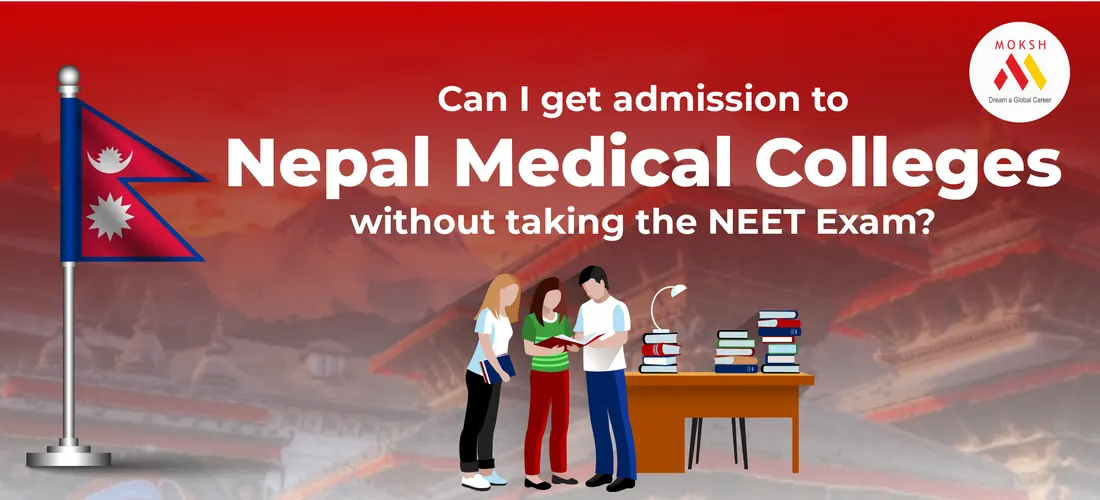
Yes, it is possible to secure admission to a Nepal medical college without taking the NEET exam, but it depends on your nationality and future practice plans. Here's a breakdown:
When considering medical education, many aspiring doctors explore various options across the globe. One popular destination for medical studies is Nepal, renowned for its high education, experienced faculty, and affordable fees. A frequent question from international students, especially those from India, is whether they can secure admission to Nepal Medical Colleges without taking the NEET (National Eligibility cum Entrance Test) exam.
Understanding NEET and Its Importance
What is NEET?
The National Eligibility cum Entrance Test is an entrance examination in India for students who wish to pursue undergraduate medical (MBBS), dental (BDS), and AYUSH (BAMS, BHMS, etc.) courses in both government and private institutions. NEET is mandatory for Indian students aspiring to study medicine abroad, including those in countries like Nepal.
Why is NEET Important?
1. Uniformity in Admission:
NEET ensures a standard level of competence among medical aspirants.
2. Regulatory Requirement:
The Medical Council of India (MCI) mandates NEET for students wishing to study medicine abroad and practice in India.3. Quality Assurance:
Admitting competent students helps maintain the quality of medical education.Admission to Nepal Medical Colleges: NEET Requirement
General Admission Criteria
- Academic Qualifications: Students need to complete their 12th education with Physics, Chemistry, Biology/Biotechnology, and English as their main subjects.
- Minimum Marks: Typically, a minimum of 50% in PCB (Physics, Chemistry, Biology) is required for general category students. For reserved categories, the requirement is usually 40%.
- Entrance Examinations: Apart from NEET, some colleges might have their entrance exams or consider SAT scores for international students.
NEET Requirement for Indian Students
For Indian students, NEET is mandatory for pursuing an MBBS degree in Nepal. The Medical Council of India (MCI) has stipulated that any Indian student who wishes to study medicine abroad, including in Nepal, must qualify for NEET. This regulation ensures that students who pursue medical education abroad are at par with those studying in India.
Exemptions and Alternative Pathways
While NEET is mandatory for Indian students, there are certain scenarios where students might seek alternatives:
Other Entrance Exams:
Some Nepalese medical colleges conduct their own entrance exams for international students. However, Indian students must still qualify for NEET to be eligible for these exams.
Direct Admissions:
In rare cases, colleges may offer direct admissions based on academic performance. Yet, NEET qualification remains a prerequisite for Indian students.Advantages of Studying Medicine in Nepal
1. Quality Education
Nepalese medical colleges are known for their high standards of education. The curriculum is designed to match international standards, ensuring that students receive comprehensive medical training.
2. Experienced Faculty
Medical colleges in Nepal boast experienced faculty members who are well-versed in their respective fields. Many professors have international experience, providing students with valuable insights and knowledge.
3. Affordable Fees
Compared to many other countries, the cost of medical education in Nepal is relatively affordable. This makes it an attractive destination for students seeking quality education without exorbitant fees.
4. Cultural Similarity
For Indian students, studying in Nepal offers the advantage of cultural and geographical proximity. The shared cultural heritage and similar lifestyle make it easier for students to adapt and feel at home.
5. Clinical Exposure
Nepalese medical colleges provide ample clinical exposure to students. Hospitals affiliated with these colleges offer hands-on training, allowing students to gain practical experience in patient care.
Conclusion
In conclusion, while NEET is mandatory for Indian students looking for admission in medical colleges in Nepal, the process is straightforward and rewarding. Nepalese medical colleges offer quality education, experienced faculty, affordable fees, and ample clinical exposure, making them an attractive destination for aspiring doctors. By understanding the admission criteria, preparing adequately for entrance exams, and leveraging the cultural and geographical proximity, students can embark on a successful medical education journey in Nepal.