


Kabardino Balkarian State University (KBSU) Russia: MBBS Fees, NEET Admission & FMGE Pass Rate 2026
Kabardino Balkarian State University (KBSU) is located in the city of Nalchik, Russia. It has an English medium MBBS Course that spans for 6-year duration for NEET qualified students of India. The entire course charges are around Rs.28,38,000. The university has been highlighted in the World Directory of Medical Schools (WDOMS) and they are duly governed by the rules outlined in the NMC FMGL 2021, which allows the students to sit for the Licensing test in India. The pass percentage for the 2025 cycle turned out to be a remarkable 31.72% for KBSU in the FMGE, outperforming the national average for Russian medical graduates. In this guide you'll learn about fees, admission requirements, scholarships available, safety issues, and career prospects before you apply.
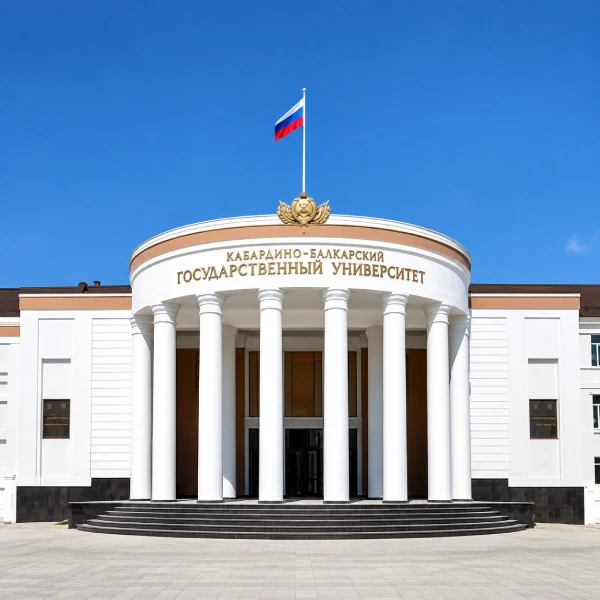
Is Kabardino Balkarian State University Fully English-Medium?
Yes. The Specialist's Degree in General Medicine at KBSU Russia runs fully in English for all six years. Lectures, lab manuals, slides, and exams all use English.
Some agents claim KBSU is "bilingual." This is not true. The claim usually comes from consultants who earn smaller commissions from KBSU's low fees. They push students toward pricier universities in Moscow or Saint Petersburg instead.
There is one language requirement worth knowing. Mandatory Russian language classes are taught from the first semester. This does not take the place of English lectures. It can facilitate communication with patients during hospital rounds from year 4 onwards. The University Library also holds Indian authored medical texts, making it easy for the students to comply with the Indian medical licensing Board regulations while studying medicine.
Is KBSU Russia Compliant With NMC FMGL 2021?
Yes, KBSU is meeting the core requirements as mandated by the National Medical Commission (NMC) of India under Foreign Medical Graduate Licentiate (FMGL) 2021 norms.
Length of course
A 54-month minimum is required by the NMC and this course is 5.8 years long.
Single University Rule
Bundling training together across multiple campuses is not an option at KBSU. Students attain the complete degree and internship at a single institution as NMC requires.
The Degree conferred
Medical Degree (Physician). This is accredited by the Ministry of Health of the Russian Federation and makes it possible to write the state qualification exam.
Programme structure
The Programme is designed according to the Bologna Process. The first 3 years are devoted to the pre-clinical and paraclinical science. The last three years cover clinical clerkships and bedside training in hospitals.
Kabardino Balkarian State University Fees 2026
The table below shows the year-wise cost for the General Medicine program. Rates use 1 RUB = Rs.1.10 and 1 USD = Rs.90.
| Fee Category | Year 1 | Years 2-6 (each) |
|---|---|---|
| Tuition Fee | 395,000 RUB | 395,000 RUB |
| Hostel Fee | 18,000 RUB | 18,000 RUB |
| Visa & Insurance | 6,000 RUB | 6,000 RUB |
| One-Time Charges (OTC) | 1,100 USD | - |
| Misc. Admin Fee | 24,000 RUB | - |
| Total Annual Cost | Rs.5,66,500 | Rs.4,60,900 |
- Tuition Fee & Hostel accommodation
- Visa & Insurance
- One-Time Charges (OTC)
- Misc. Admin Fee
The six-year total comes to roughly Rs.28,38,000. Under the federal budget rules in Russia, tuition may be increased by 2-3% per year.
One-Time Charges (OTC) are for paperwork in order to live legally in Russia:
- MVD study invitation letter, visa extension and Green Card.
- SNILS, INN, and Gosuslugi portal registration
- Pick-up, transport to Nalchik, notification of transcripts.
KBSU Russia FMGE / NExT Pass Rate
KBSU's official FMGE/NExT pass rate has climbed steadily as its Indian student base has grown.
| Year | Candidates Appeared | Candidates Passed | Pass Rate |
|---|---|---|---|
| 2012-2014 | 4 | 1 | 25.00% |
| 2020 | 2 | 0 | 0% |
| 2024 | 396 | 105 | 26.52% |
| 2025 | 268 | 85 | 31.72% |
Scholarships for Indian Students at KBSU
KBSU is a public university, so funding works differently for budget (state-funded) students versus self-funded (contract) students. Almost all Indian MBBS students fall into the second group.
Government stipends (budget students only)
- Base scholarship: around 3,570 RUB per month
- Rises about 25% for students who keep straight "Excellent" grades
- Postgraduate and residency stipends range from 4,770 RUB to 11,930 RUB per month
External scholarships for self-funded Indian students
Since Indian MBBS students pay their own fees, most rely on outside scholarship programs rather than Russian state funds:
State-run overseas scholarships
Programs like AP's Ambedkar Overseas Vidya Nidhi and Maharashtra's SARTHI Scholarship list recognized Russian public universities, including KBSU, as eligible. Support ranges from Rs.10 lakhs up to full funding for eligible categories.
Private global grants
Funds like Education Future International Scholarship provide scholarships of Rs.2 lakhs to 10 lakhs to be paid towards tuition to KBSU.
Checking eligibility for these programs before you apply can meaningfully lower your total spend.
Career Pathways after Kabardino Balkarian State University MBBS
A medical degree does not use campus placement drives like engineering degrees. Instead, success is measured by licensing exam eligibility and clinical exposure.
| Pathway | Focus | What It Means for KBSU Graduates |
|---|---|---|
| FMGE / NExT (India) | Practicing in India | KBSU keeps a 26% to 28% average pass rate and aligns clinical training with Indian exam needs |
| USMLE (USA) / PLAB (UK) | International residency | KBSU is ECFMG and FAIMER certified, so graduates can sit for USMLE Steps 1 and 2 CK, or PLAB/UKMLA |
| Russian Residency | Practicing locally | Graduates can complete a 2-year residency in Russia; clinical stipends can reach RUB 111,350 per month |
How Indian Parents Pay KBSU Fees Safely
Western sanctions have removed some Russian banks from SWIFT, but compliant payment channels still exist. The most reliable route runs through Sberbank India, an RBI-licensed bank, and its AD-II partners.
The total amount is sent by parents in INR, which is converted to RUB and credited directly to the university's bank account. For the purpose of transfer, the partner of AD-II must have three sets of documents:
- Academic evidence - student's passports, university entrance letter and signed educational agreement
- Remitter details - Parent's PAN Card, proof of address and signed declaration of source of funds
- Bank details - university bank name, branch address, account number
On verification, the bank provides a Form A2 foreign exchange declaration and the transfer is made through NEFT/RTGS/IMPS. Don't be concerned with last-minute changes in currency because the exchange rate is fixed the day of transfer. After students arrive in Russia, they are able to open their own account in the bank (Sberbank or VTB Bank) and get their monthly spending on a debit card.
Are Indian students safe in Nalchik?
Nalchik is a medium-sized, 240,000-person Russian city in the North Caucasus region. With very low crime rates and a multi-cultural and quiet atmosphere.
KBSU enforces strict campus and hostel rules:
-
24/7 security and CCTV coverage across campus and dorms
-
Biometric ID access for academic buildings and hostels
-
No alcohol or tobacco allowed on campus or in hostels
-
Nighttime curfews, with separate hostel floors or buildings for men and women
-
Zero-tolerance policy on ragging, physical conflict, or disrespect toward faculty; violations can lead to expulsion
The Chancellor holds authority to expel students for serious misconduct. An expulsion also cancels the student's study visa immediately, so following hostel rules is not optional. The campus is also surrounded by municipal police officers who are active outside of business hours, providing additional security beyond what the university's staff can provide.
How to Reach Nalchik from India
There are no direct flights from India to Nalchik Airport (NAL). Students fly first to Moscow (SVO or DME), then take one of two routes:
Route 1
Domestic flight from Moscow directly to Nalchik Airport, about a 2-hour flight.
Route 2
Domestic flight from Moscow to Mineralnye Vody Airport, followed by a 1.5-hour road transfer to campus, often arranged by the university for new students.
Verdict: Is KBSU Worth It?
KBSU suits NEET-qualified students who want a fully English-medium MBBS at a low cost, with a degree that meets NMC rules and a rising FMGE pass rate.