


Introduction
For Indian students who want to study MBBS overseas, finding a university that meets the standards set by the National Medical Commission (NMC) is crucial. This blog discusses what the NMC expects, the state of medical education in Georgia, and whether Georgian universities meet these standards.
NMC Criteria for Medical Education
The NMC sets forth comprehensive guidelines for medical education in India, covering various aspects such as infrastructure, faculty qualifications, curriculum, student-faculty ratio, assessment methods, and teaching-learning approaches.
Do Georgian Medical Universities Meet the Criteria of the National Medical Commission (NMC) for Indian Students?
Many Indian students aspiring to be doctors consider universities abroad for their MBBS degree. With its European setting and affordable medical education, Georgia is a popular destination. However, a crucial question for Indian students is whether Georgian medical universities meet the National Medical Commission (NMC) criteria for practising medicine in India.
The answer is yes, for many universities. Here's a breakdown of the NMC criteria and how Georgian universities can fulfil them:
NMC Criteria and Why They Matter?
The NMC sets guidelines to ensure medical graduates in India and abroad receive a well-rounded education that prepares them for the challenges of the medical field. Let's explore some critical NMC criteria:
- Infrastructure: The NMC mandates a well-equipped learning environment with lecture halls, laboratories, a library with up-to-date medical texts and journals, a museum, and a functional hospital attached to the university for clinical training. Modern infrastructure ensures students have access to the latest resources and practical training facilities.
- Faculty: The NMC requires a sufficient number of qualified faculty members with relevant experience and postgraduate degrees. A strong faculty is essential for providing quality education and mentorship to students.
- Curriculum: The NMC sets a detailed curriculum that includes Anatomy, Physiology, Biochemistry, Pathology, Pharmacology, Community Medicine, and clinical topics. This curriculum ensures students gain both theoretical knowledge and practical skills needed for medical practice.
- Student-Teacher Ratio: The NMC mandates a student-teacher ratio that allows adequate individual attention and practical training. A low student-teacher ratio fosters a more interactive learning environment.
- Medium of Instruction: The NMC prefers English as the medium of instruction, although some exceptions may exist. English is widely understood in the medical field, allowing graduates to pursue careers internationally and access international medical resources.
- You can refer to official NMC website for further information. Or check out [National Medical Commission New Guidelines for MBBS Abroad 2024]
How Georgian Universities Match Up?
- Many Georgian medical universities are rigorously reviewed and meet the NMC's requirements. These universities often boast:
- Modern infrastructure with well-equipped labs, libraries, and affiliated teaching hospitals.
- Qualified faculty with international experience.
- A curriculum aligned with NMC guidelines, often taught in English.
- Favorable student-teacher ratios for personalized learning.

Medical Education Landscape in Georgia
Georgia has become a favoured destination for Indian students seeking an MBBS degree abroad due to several factors:
- Affordable Tuition Fees: Compared to Indian private colleges, Georgian universities offer MBBS programs at significantly lower costs, typically ranging from $3,000 to $6,000 annually.
- Recognition by NMC: Many universities in Georgia hold accreditation from the NMC, ensuring that Indian graduates are eligible to pursue medical careers in India after passing the National Exit Test (NEXT).
- English-Medium Instruction: Most Georgian universities offer MBBS programs in English, removing language barriers for international students.
- Structured Programs: Georgian medical programs generally adhere to international standards, focusing on theoretical knowledge and practical training.
- Moderate Student-Faculty Ratio: While the average student-faculty ratio in Georgian universities varies, it typically ranges from 10:1 to 15:1, allowing for personalized attention.
- Number of Universities: Georgia boasts approximately 15 medical universities, offering a diverse range of options for students.
Comparison Table: NMC Criteria vs. Georgian Universities
While Georgian universities offer attractive options for Indian students, it's essential to assess how well they align with NMC criteria. Find the table below for the comparison table of NMC Criteria vs. Georgian Universities:
| Criteria | NMC Requirement | Georgian Universities (Average/Examples) |
|---|---|---|
| Faculty Qualifications | Sufficient number with relevant experience and postgraduate degrees | Many have qualified faculty, often exceeding 50% with postgraduate degrees (e.g., TSMU) |
| Student-Faculty Ratio | Low ratio for adequate individual attention and practical training | Varies, typically 10:1 to 15:1 |
| Infrastructure | Well-equipped learning environment with affiliated teaching hospitals | Modern facilities with labs and libraries, some with affiliated hospitals |
| Curriculum | Comprehensive curriculum covering specific subjects | Generally aligned with international standards, often taught in English |
Well-Regarded Universities:
Georgia's medical universities are gaining popularity for offering a quality MBBS education at a reasonable cost. Let's delve into what makes them stand out
- University of Georgia (Integrated American Program)
- Tbilisi State Medical University
- David Tvildiani Medical University AIETI
- Akaki Tsereteli State University
- Ivane Javakhishvili Tbilisi State University
- Batumi Shota Rustaveli State University
Curriculum Structure - What You'll Learn:
The MBBS curriculum in Georgia typically covers a broad range of subjects, including:
| Subject | Description |
|---|---|
| Anatomy & Physiology | Study of the structure and function of the human body. |
| Biochemistry & Microbiology | Study of chemical processes and microorganisms. |
| Pathology & Pharmacology | Study of diseases and the effects of drugs. |
| Internal Medicine & Surgery | Study of diagnosis, treatment, and prevention of adult diseases and operative procedures. |
| Pediatrics & Obstetrics & Gynecology | Study of medical care for children and pregnancy, childbirth, and female reproductive system health. |
| Public Health & Medical Ethics | Study of promoting health and preventing disease in populations; and moral principles in medical practice. |
Testing Your Knowledge - Assessments:
Universities utilize a combination of written exams, practical assessments, and oral examinations. Grading systems often follow a letter-based system (A-F) or a percentage scale.
- Case studies: Analyze real-life medical scenarios to develop problem-solving skills.
- Simulations: Practice procedures and decision-making in a safe, controlled environment using mannequins and high-tech simulators.
- Interactive learning: Participate in group discussions and presentations to enhance understanding.
Practising Medicine in India after MBBS in Georgia
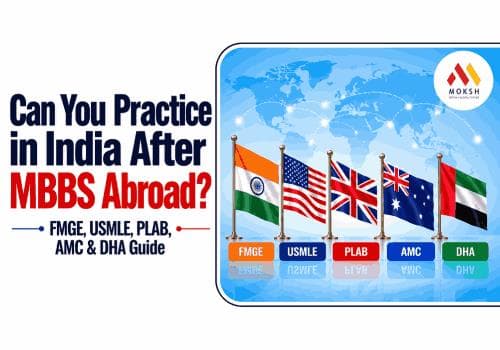
Earning your MBBS in Georgia is just the first step. To practice medicine in India, you'll need to clear the National Exit Test (NEXT). This single licensing exam replaces the former Foreign Medical Graduates Examination (FMGE).
Here's how it works:
- Graduate from a NMC-approved university in Georgia. Make sure the program lasts at least 54 months and includes a compulsory 1-year internship.
- Register with the National Medical Commission (NMC). Stay updated on NMC website for any changes in registration procedures for foreign medical graduates.
- Clear the NEXT exam. This exam rigorously tests your medical knowledge and clinical abilities.
By meeting these criteria, you become eligible to practice medicine in India and contribute to its healthcare sector.
Conclusion
Selecting the right university is vital for a successful medical career, especially for Indian students studying MBBS in Georgia. It's crucial to thoroughly research NMC-recognized institutions, considering factors like faculty credentials, curriculum, facilities, and teaching methods.
In conclusion, while Georgian medical universities offer opportunities, a cautious and informed approach is necessary to meet NMC standards. Moksh Overseas Consultants provides expert guidance for Indian students navigating MBBS abroad, ensuring compliance with NMC standards. Make an informed decision today for a brighter tomorrow in medicine.
.png&w=640&q=75)